

Do You Have a Growth Mindset?
The Sky Was Never the Limit

What’s stopping you from chasing your dreams?
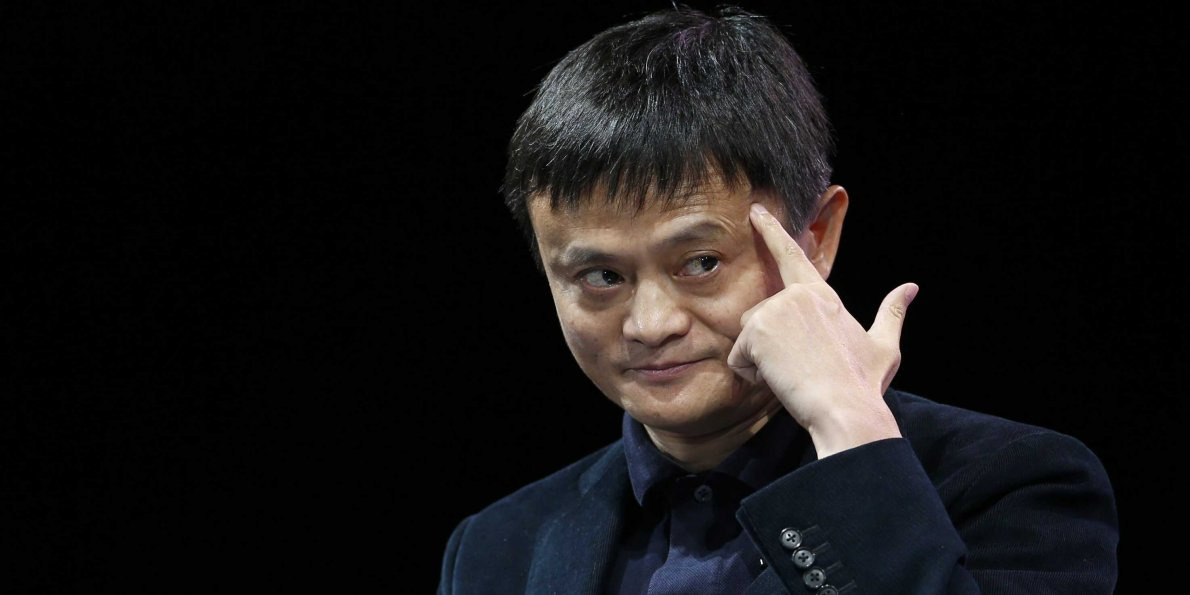
Before Jack Ma became the founder of Asia’s largest e-commerce platform, he was simply the second child of a poor family in China. He grew up with little, his father being a traditional musician and his mother working in a factory. Back then, he wasn’t known as “Jack” Ma. At the time, communist China remained largely closed off from the West. But in 1972, when former U.S. President Richard Nixon visited Ma’s hometown, the city suddenly turned into a tourist mecca. Ma seized this unexpected opportunity to learn English.
As a young boy, Ma Yun (Jack Ma’s given name) would rise early each morning and bike to the city’s main hotel, where he offered free tours to Western visitors in exchange for English lessons. At age 12, he bought a small radio and listened obsessively to English-language broadcasts to improve his communication skills.
For nine years, Ma pedaled to the hotel every day to guide tourists. During this time, he befriended one visitor who struggled to pronounce “Ma Yun” and began calling him “Jack.” This nickname would eventually become his global identity.
Ma’s education was also fraught with many challenges. He struggled in school, particularly in mathematics. After high school, he failed China’s national college entrance exam twice, reportedly scoring just one point in math on his first attempt. On his third try, he finally passed and was admitted to a local university.
But even with a college diploma, Ma faced repeated rejection when applying for entry-level jobs. When KFC opened in his hometown, he applied along with 23 other candidates. Unfortunately, he was the only one who got rejected.
He eventually landed a position as an English instructor, earning just $12 a month. After five years of teaching, Ma left his job to pursue something he never imagined would redefine China’s place in global e-commerce.
Despite his hardships and personal limitations, Ma exemplified a psychological principle that underlies the resilience and hard-won success of many influential figures today: a growth mindset.
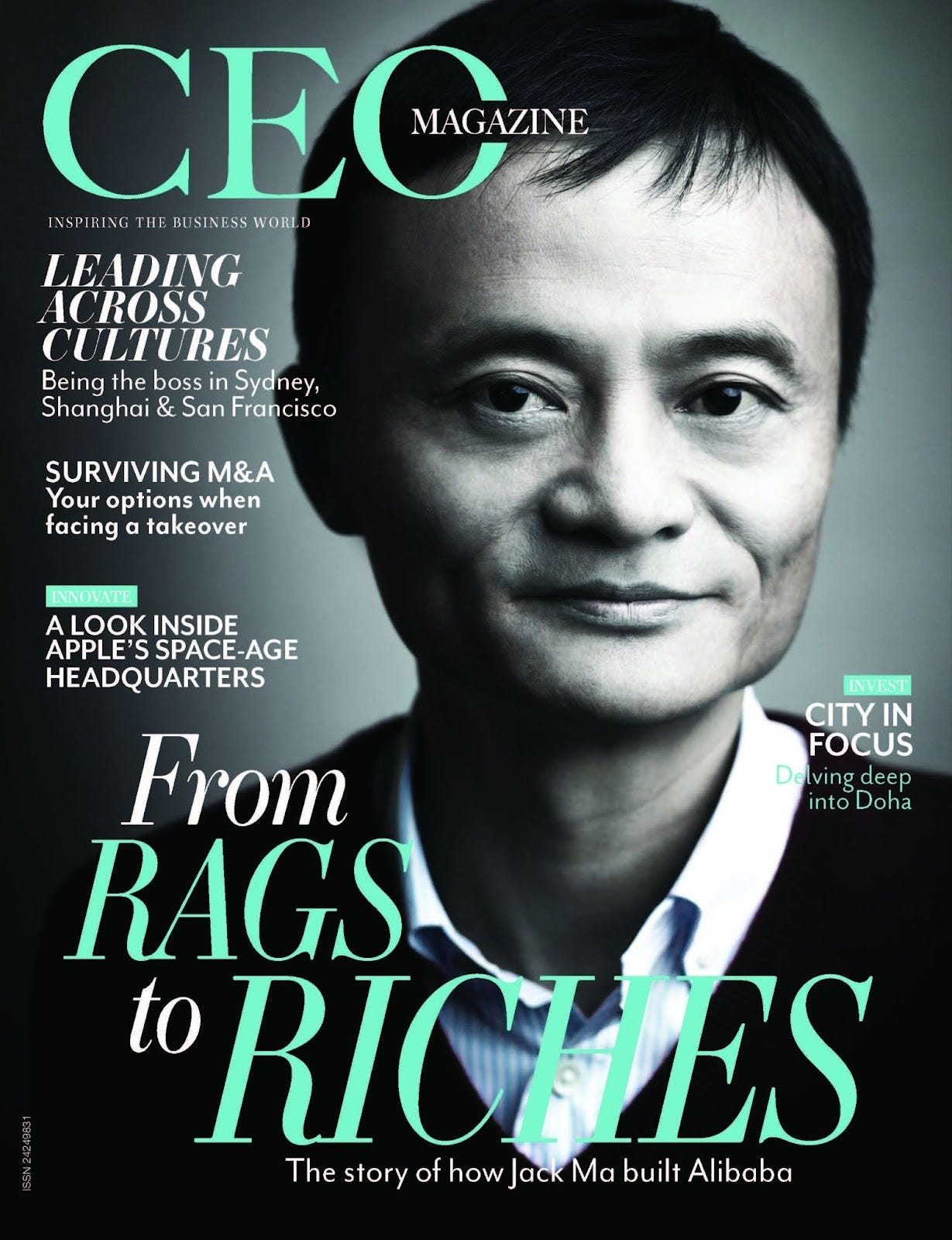
What is a Growth Mindset?
Pioneered by Stanford psychologist Carol Dweck, a growth mindset is the belief that one’s intelligence, capacities, and talents can expand and be enhanced over time. This is contrary to a fixed mindset, where intelligence and abilities are believed to be static and unchangeable traits. Based on the study conducted by Dweck’s team on a group of students, they found that students’ mindset about intelligence is a central factor in their academic resilience and learning process.
Learners with a fixed mindset tend to worry about proving their intelligence rather than improving it. Challenges or setbacks often lead to negative thoughts, feelings, and behaviors about themselves. A classic example is thinking that one is “dumb” or inadequate, which intensifies feelings of discouragement until they eventually give up.
On the other hand, people with a growth mindset often respond to obstacles with constructive thoughts. For instance, they change their problem-solving strategies or try harder to overcome a problem. They also exhibit more positive feelings and behaviors, such as persistence. Instead of seeing challenges as roadblocks, they take them as opportunities to learn and improve.
While a fixed mindset nurtures a limiting mentality that hinders us from reaching our full potential, having a growth mindset means being willing to put in the effort to meaningfully develop our skills, knowledge, and character, even if it takes time and resources. This makes people with a growth mindset, like Jack Ma, more receptive to success.
After leaving his teaching role, Ma opened his own translation business in 1994. He visited the United States in 1995 to recover a payment for a Chinese firm. It was on this trip that he was introduced to the internet. With no tech knowledge to start with, he quickly became fascinated. He began exploring the computer and typed in the word “beer.” When not a single Chinese brand appeared in the search results, Ma made a bold commitment to put China on the digital map.

What a Growth Mindset is NOT
There are three common misconceptions about the growth mindset, which Dweck addressed in an article published on the Harvard Business Review.
First, many people confuse being open-minded or merely optimistic with having a growth mindset. They assume that because they generally embrace new ideas, maintain a positive attitude, or see themselves as flexible thinkers, they must already possess a growth mindset.
Second, some believe that simply praising effort is sufficient. Dweck’s research shows that what truly matters is acknowledging the process, learning, and progress involved in our endeavors.
Lastly, some assume that talking about a growth mindset (or putting reminders and making to-do lists) is enough. Without meaningful action to build a culture that supports a growth mindset, such reminders are merely decoration.
A genuine growth mindset goes beyond general positivity or openness. It involves a deliberate belief that abilities can be developed through commitment, effective strategies, and feedback. It requires a willingness to confront challenges, persist through setbacks, and view failure as a source of learning. It’s not simply about maintaining a sunny outlook in life.
Having a growth mindset also means taking calculated risks, even when they may not work out. How one often bounces back from failures is what defines this mentality. Ultimately, the greater priority is consistently strengthening that mindset.
According to Dweck, people with a growth mindset exhibit the following key traits:
They welcome challenges.
They remain determined even when they encounter obstacles.
They view effort as essential for developing expertise.
They use feedback as an opportunity to improve.
They draw motivation and insight from other people’s successes.
Yet, shifting our belief system alone isn’t enough. Achieving meaningful goals also requires a healthy dose of grit and resilience.

Growing with Grit and Resilience
Researchers found that a growth mindset is deeply associated with grit and resilience.
While observing students in her school work, psychologist Angela Lee Duckworth noticed that some students are naturally better at tackling long-term problems than others. In 2006, she began to formally study the subject of grit and the power of passion and perseverance in achieving success.
Grit refers to sustained passion and effort toward long-term goals. People may be born with different levels of it, but Duckworth believes grit can be strengthened, especially by developing a growth mindset.
A growth mindset supports grit by reinforcing the belief that our abilities can be enhanced through hard work, making it easier to stay committed even when progress is slow or difficult.
Resilience complements grit, allowing individuals to recover after setbacks, adapt to challenges, and continue moving forward. Like grit, resilience can grow through experience and intentional practice.
Together, grit provides the long-term drive, while resilience supplies the capacity to bounce back. These traits are both fueled by the foundational belief that improvement is always possible.
Jack Ma wasn’t a genius, nor did he have expert knowledge in business or software programming. He reportedly had applied for an MBA degree at Harvard University, only to be rejected 10 times. But he had a vision and the resilience to pursue his dreams.
Ma’s early tech business ideas didn’t succeed. His first two ventures failed. Still, he persisted. After four years, he secured investments from his friends to fund a new online marketplace called Alibaba. By October 1999, the company secured $25 million in funding from Goldman Sachs and SoftBank. And in 2005, Yahoo invested $1 billion in Alibaba. Now, Jack Ma’s net worth is estimated to be $27 billion.

Breaking the Limit
Our dreams may not be as grand as Jack Ma’s or those of the top billionaires in the world. For most of us, we only want a loving family, a peaceful home, perfect health, and a well-padded bank account enough to meet all our needs and travel the world without worrying about tomorrow.
But when life happens, even these simple dreams slip away, driven out by our pain and disappointments. We become disillusioned by the corrupt systems and the injustices of our reality, robbing us of the courage to chase our God-given desires.
But for Jack Ma, the sky was never the limit. He didn’t have generational wealth or the connections to gain an early start in life. What he had was one thing that truly mattered — a growth mindset. He refused to allow his poverty and academic struggles to define his future and limit what he could achieve.
How about you, what’s stopping you from embracing your full potential?
If you’re ready to kickstart your growth mindset journey, explore my Notion Growth and Learning Hub — a curated space to organize your podcasts, books, movies, and courses focused on personal growth. With over 100 recommendations, you’ll find resources on habit formation, mindset shifts, healthy living, financial literacy, and much more.
Find this content helpful?
If my words sprinkle a little magic on your day, why not help me stir the creative brew with a splash of coffee?
Every cup you send my way powers up my writing spark so I can keep whipping up fresh content that empowers you toward that personal win. No pressure, just some Pumpkin spice latte appreciation. ☕
To wrap up this post, here’s a mood booster from SB19’s Burn the Flame, inspiring us to stay resilient, keep our inner fire alive, and push forward no matter the challenges.
Sources: Stanford Teaching Commons, Psychology Today, Business Insider, PressFarm, Navigator, Positive Psychology